Old Man Workout is a five- or ten-minute break I take from the desk. You play a couple of brain games, then do a few posture moves for the hips, shoulders, and feet that sitting stiffens. A low-poly grandpa named Gus coaches you through it. On day one he’s hunched over a cane. Keep a streak going and he drops the cane at day 14, swaps his flat cap for a sweatband, and by day 80 he’s squatting all the way down in a red track suit.
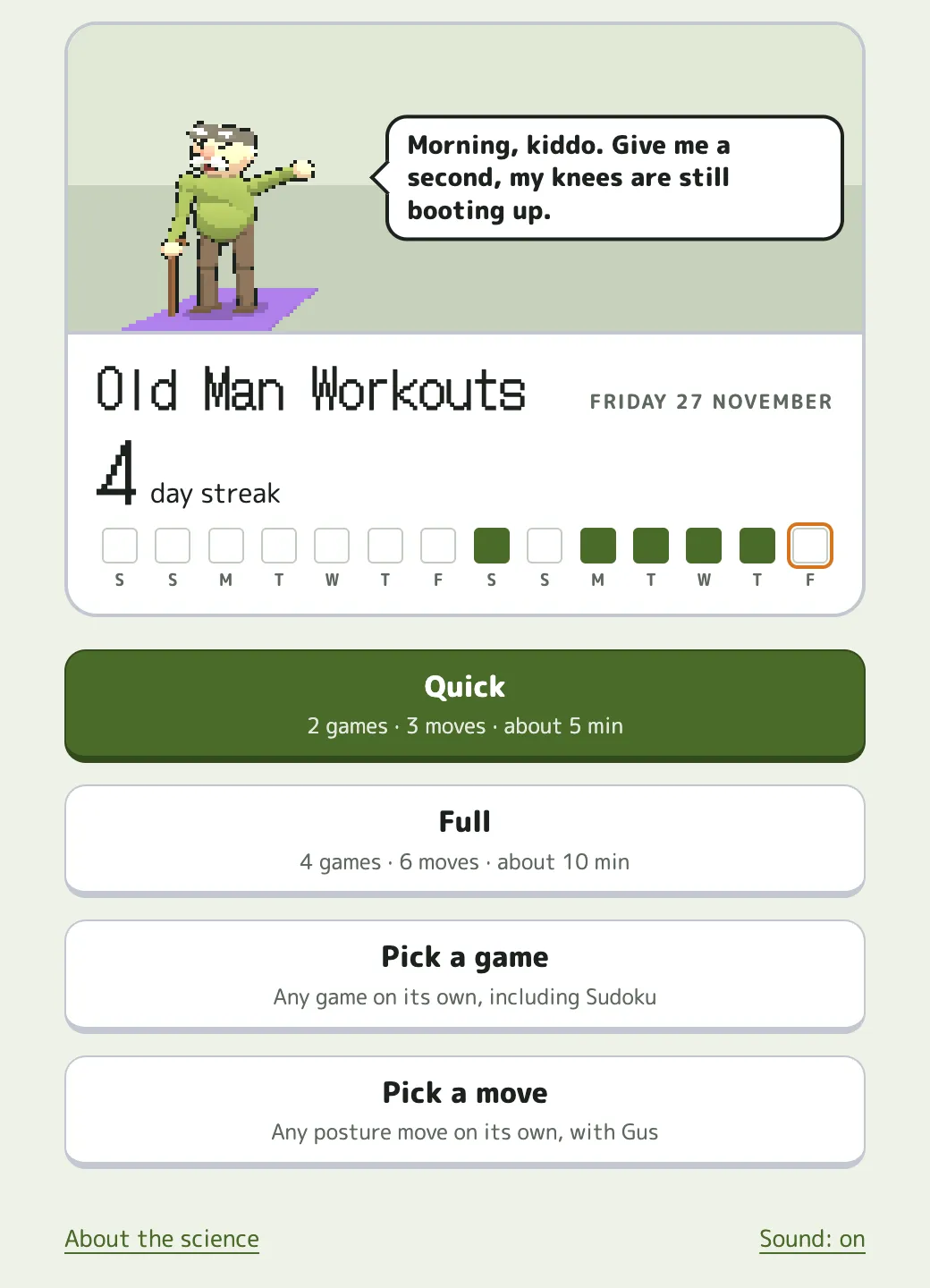
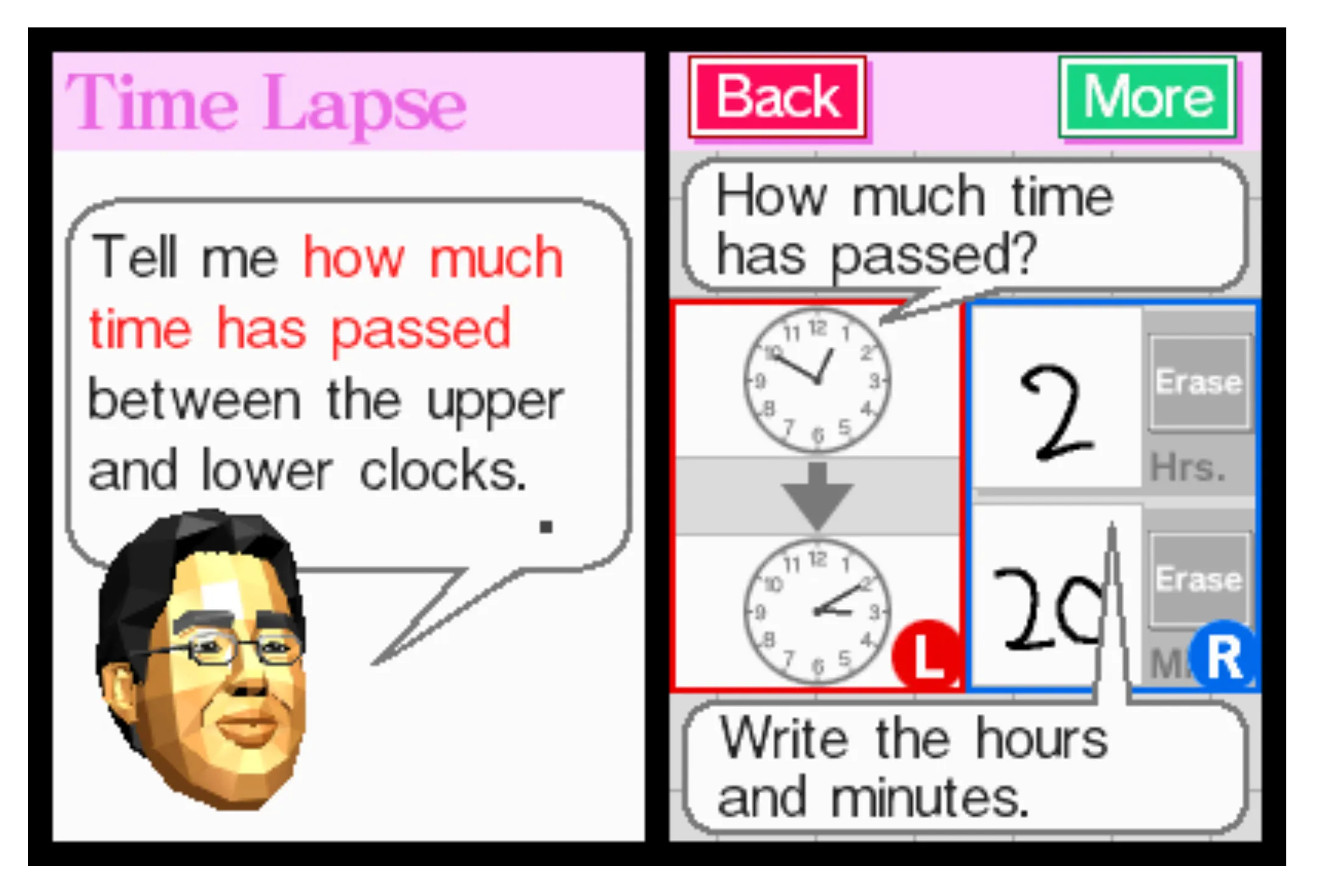
I made it for two reasons. Even though I go to the gym 4 to 5 times a week, long days at a desk leave me stiff. I wanted a short break that got my head and my body working. I also missed the brain-training games on the Nintendo DS, where a professor greeted you every morning and tracked how sharp you were. I wanted that feeling back, along with the stretching that I should be doing anyway.
The routine
My first version, called Daily Hinge, was all routine and no character. A Quick session is two games and three moves, about five minutes. A Full session is four games and six moves. The games are short tests of speed and memory: mental math, a color-word clash where you tap the ink and ignore the word, digit and tile sequences, spotting the odd character in a grid, word recall, and counting dots that flash for a moment. Sudoku is there too, on its own. Gus says it’s his favorite.
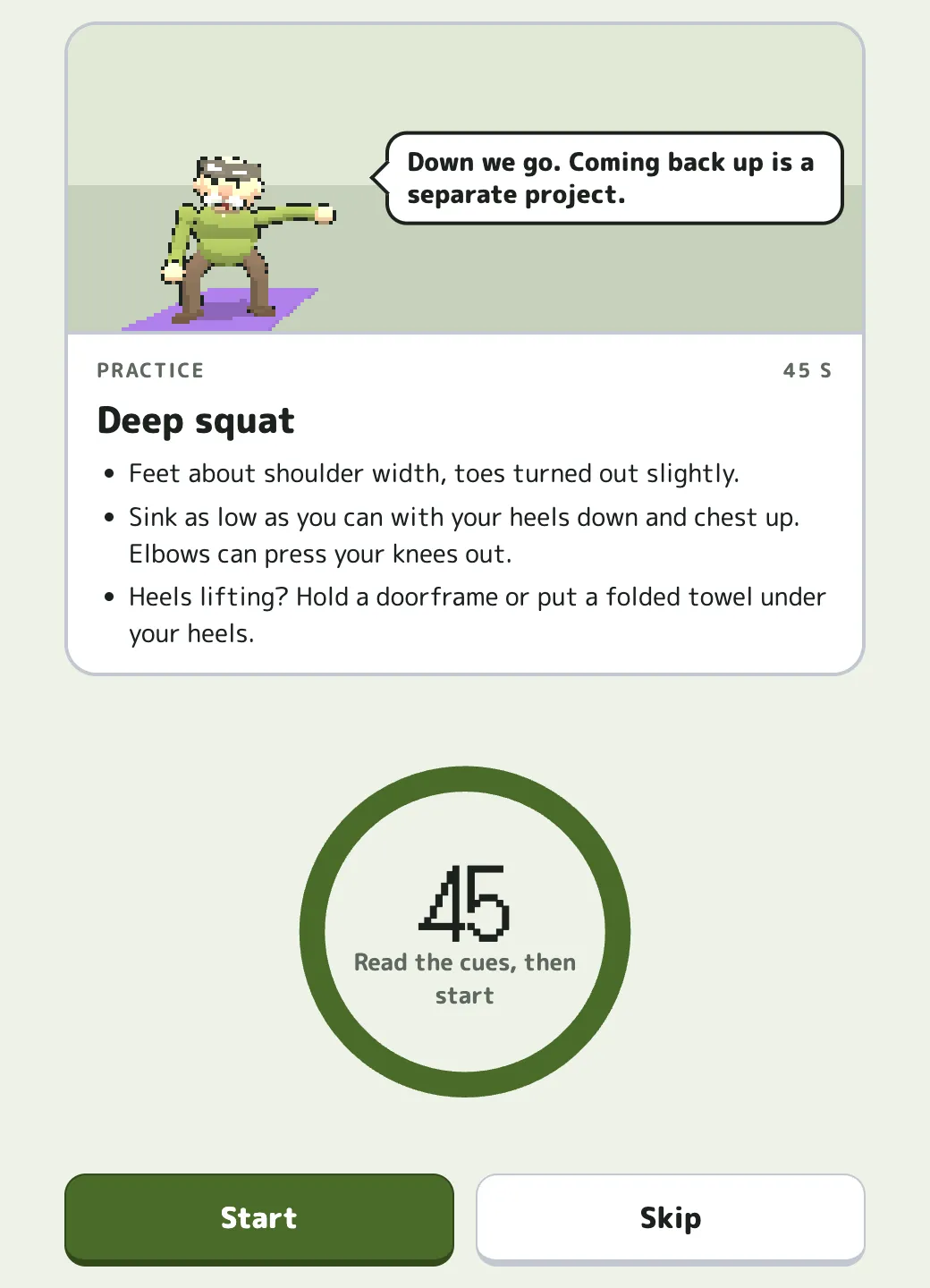
The moves are mostly floor work: frog squat rocks, horse stance, bear crawl, a reverse table top, toe sit kneel, and a deep squat. Each one has a timer and three short cues, like “Heels lifting? Hold a doorframe.”
Brain games mostly make you better at brain games. In a six-week study with 11,430 people, players improved at the tasks they trained on but not at untrained ones, even closely related tasks. A 2016 review of the brain-training research came to the same conclusion. So the app doesn’t promise a sharper mind. It asks how clear your head feels before and after each session instead. After a few sessions, the home screen shows your average before and after. If the second number is higher, the break is doing something for you. That’s the only claim the app makes.
Finding a coach
A streak counter on its own is a number. I wanted someone to show up for. So before adding a character to the app, I built a simulator to audition four of them. They share one skeleton. A slider fast-forwards the streak from day 1 to day 100, and eight buttons trigger the moments the app needs a reaction for, like a right answer, a wrong one, a squat, finishing the day, and coming back after a few days off.
Here’s the simulator. Pick a coach, drag the streak past 14, 21, 45, and 80 to see what he unlocks, and press the buttons or the number keys to make him react. The row under the slider switches between the four looks I compared, two in 3D and two in 2D. Lineup puts all four coaches on screen at once, and Auto-play runs through the reactions for you.
Each coach has a backstory, a voice made of synthesized blips, and milestones where his outfit changes:
- Professor Pell is closest to the DS idea, a scientist delighted by your reaction times.
- Gus is a grandpa who jokes about his own knees.
- Master Ume wears a belt that changes color with the streak, a progress bar anyone can read.
- Big Al is a retired wrestler in an old T-shirt who talks in all caps.
For each one I wrote down what worked and what could go wrong. Big Al would get tiring fast, and he had no business shouting during a memory game. Gus won because his jokes are always about himself, so a wrong answer never feels like you’re the punchline.
Building it
Old Man Workout is a single HTML file with no build step, hosted on Netlify. You don’t need an account. Your streak, scores, and head checks are saved in your browser’s local storage and never leave your device. The trade-off is that they don’t sync between devices, and clearing your browser data resets your streak. Gus is about 440 lines of that file. If three.js doesn’t load or the browser can’t do WebGL, he disappears and the app works without him.
I built it with Claude Code. That’s what made a throwaway simulator with four characters worth building at all, since I was only going to keep one of them. A lot of the work went into the animation. On day one, Gus’s squat stops halfway. His horse stance trembles until he’s strong enough to throw punches in it.
Gus does the squats with you, so if you’re stiff from the desk too, give him a try. He’ll be waiting with his cane.